Showing posts with label Answers to questions. Show all posts

Wednesday, July 27, 2011

Saving You 15% or More on Links for the Past, Present and Future

Courtney Milan talks the future of agents in a self-publishing world in “An open letter to agents,” the first of (what sounds like) two columns. Milan, whose self-published novella Unlocked is currently sitting at spot # 102 in the Kindle store, has an amazing mind, and her dissection of agents and their role in a world where author’s don’t need them to publish raises some very important points. She writes:

Agents, I don’t think you have any idea how much your writers are talking about you right now. Seriously. I don’t think you have any idea. I am getting multiple e-mails every day from writers who are worried about what their agents are doing, and who are worried about how to handle agents, and who want to be fair to their agents but also don’t want to pay them a percentage when there’s little to no work involved, and/or the agent handles little of the risk.

If you haven’t already, I would suggest adding her to your feedreader of choice. (Link via Kalen O’Donnell)

For you SciFi fans looking for out of print lost loves there is good news – “Gollancz, the SF and Fantasy imprint of the Orion Publishing Group, announces the launch of the world's largest digital SFF library, the SF Gateway, which will make thousands of out-of-print titles by classic genre authors available as eBooks.” Check out the Book Trade Announcement pressrelease for more information. (Link via io9’s Charlie Jane Anders)

The Apple store has started to enforce it’s in app buying policies and this just adds to the hard couple of weeks the publishing world has experienced. Mike Shatzkin suggests that “Publishing is living in a worldnot of its own making.

“…the happy symbiosis between the ebook retailers and Apple, by which the retailers got access to customers they would not otherwise have had and Apple was able to readily deliver their customers content they hadn’t otherwise aggregated, appears to have come to an end.”

(link via TeleRead.)


Flavorwire highlights Christian Jackson’s “MinimalistPosters for Your Favorite Children’s Stories.” I’ll take the one of Little Red Riding Hood.

As if the Borders news wasn’t sad enough, GalleyCat says that BAM has dropped its bidfor the 30 stores in the NE. That said, the “Help Ex-Borders Employees” continues to add new job postings every day.

I've been getting hits daily for people searching "When will Borders.com close down?" or some variation there of. While I don’t know when the Borders website will be closing, I assume that it will be posted to the Borders Group, Inc  Case Administration website soon. For those of you looking for information on the bankruptcy or how it will affect your ability to buy books, this is the site to check. Currently it states:

On July 21, Borders Group received Court approval of a previously announced proposal from Hilco and Gordon Brothers to purchase the store assets of the business and administer the liquidation process under Chapter 11 of the Bankruptcy Code. Liquidation of 399 stores nationwide commenced July 22 and stores are expected to close by the end of September.
During the liquidation period:
  • Borders gift cards will be honored in stores throughout the sale.

  • In addition to store liquidation discounts, Borders Rewards PLUS members will continue to receive additional discounts on qualifying purchases through Aug. 5. In addition, all existing Borders Bucks can be redeemed until they expire on July 31.

  • Borders.com and the Kobo eBook store, which can be accessed through Borders.com, are operating. In addition, Borders gift cards are being honored on Borders.com.

And finally, this sign my roommate sent me this sandwich board for the Between theCovers Bookstore in Bend:


This does raise the question though, if I go to bed with a new book every night does that make me a slut?

Friday, September 07, 2007

Blogging and You: Why Do It

Thank you all for your response to Kevin’s question. I’m going to break things down into a few different categories and we can take the discussion from there. In what will probably be a several post piece, let’s start with the basics:

Why Blog in the First Place?

“I think the primary benefit of my blog is for keeping the existing readers fired up to go spread word of mouth.” Shanna Swendson

You’ve written the book, made a contract with the publisher, and survived the editing process, but your job still isn’t done. To counteract the ever decreasing marketing budgets at the publishing houses, you’ve got a find a way to grow your readership and keep them coming back—whether it is for the next book in a series, or a new book all together. Blogs can create that direct sense of connection between writer and reader, and they cost nothing to create. Well, nothing except time, effort and creativity…but we’ll get to those in a minute.

First let’s focus on what a blog lets an author do:

  • Connect with readers by sharing their thoughts on the book process, the characters and proving they’re just like everyone else (Authors! They’re just like us! A new feature to found in the writer’s version of US Weekly).**
  • Create an up-to-date presence on the internet that with tagging can increase your presence to the Google algorithm (given that 60% of the population uses Google as their first choice search engine, this is a good thing).
  • Offer up advance excerpts, answer reader questions, and let readers know when the next book is coming out without waiting for your webmaster to update a website. Just write and hit post.
  • Talk about other books that are similar that the author like, or direct the readership to other authors of note.
  • Connect with other authors, direct readers to advance reviews, and network, network, network!

A successful author blog creates a community led by the author that allows readers to connect and builds on the loyalty of the readers. As Kalika said, “it makes authors seem less like strangers and more like people I know, so I'm more likely to want to buy their books instead of borrowing them from a friend or the library.” This loyalty and excitement from the blog transfers to readers going out to the bookstore to find the book or jumping on one of the online sites to make their purchase. Then on their own blogs, or in conversations with store patrons or friends, this reader will spread the word about this author’s work. The sales might not be able to be traced directly back to the author’s blog, but it acts as a strong link in the chain that gets people to read your books.

Author as Essayist?

One of Kevin’s points with this question (which I didn’t include, but he thankfully reiterated in the comments section) is that not everyone has what it takes to be a successful blogger—one who “can take the mundane or the complicated and make it interesting, funny, and readable. But that in itself is a particular writing talent, and not every writer will be good at doing that as opposed to their normal mode of writing.”

Back in February, I asked why people read any blogs at all in “Writer as Blogger, Blogger as Writer.” The answers I received cited Voice and Content as the two biggest reasons for following a blog. These two things working alone and together accounted for the loyalty most readers felt towards the blogs they followed. In many cases people cited finding a blog looking for some sort of content, and sticking with it for the voice.

But how does this affect an author’s blog when taking into account Kevin’s definition of a successful blogger?

Voice

Just as the acquisitions editor must consider the voice of your manuscript when deciding whether or not to purchase it, so does the passing reader when they decide whether or not to make a commitment to your blog. This voice is especially important for the fiction (as opposed to nonfiction writers) writer as you can’t always rely on content to bring new readers to your blog. Links from other authors might drive people there, but it is the voice you bring to the blog that keeps new readers there and old readers coming back regularly.

Blogging, with all its informality and immediacy, creates a sense of closeness between author and reader that you can foster with the tone or voice that you use for each post. By assuming an approachable style, you invite the reader to put aside their shyness and interact. Narrative prose, however, often differs from how a writer might sound in a conversation. I write this blog in the same way I would converse with a friend in real life (to the point that back when I was anonymous a friend warned me that anyone who knew me and read Bookseller Chick would know the identity of the writer immediately). This blog voice shares little to no resemblance to any fiction writing I’ve done, which is fine as I’m not attempting to use this as a forum to promote myself as a writer of fiction.*

If the voice of your blog sounds nothing like your narrative writing, that’s fine. It’s you, the author, conversing with your readers, not your characters. There’s a hidden danger that comes from sounding too much like your prose. I’ve come across many a reader complaining that they can’t think of the character as their own entity because the voice they know from the author’s blog intrudes too much in the narrative. These people may represent a small portion of your readership, but it is something you should be aware of in your blogging and writing.

Although the reverse is also true, as Random Ranter states, “Blogs give me a chance to get to know a person's writing style before I plunk down my bucks.” Finding out that the author who writes humorous little essays about his/her cats, actually writes gore filled books with dark plots may throw a new reader off.

Given this “damned if you do, damned if you don’t,” how do you walk the fine line in between?

Well, that’s where content comes in.

Content

As an author, you have to decide what your blog is going to be to you. The best author blogs cover topics that both the author and the reader care about. As Lectitans states in her response to the “Writer as Blogger, Blogger as Writer” column, “The best blogs are conversations. I don't want to read a blog where the blogger writes only what she thinks her readers want without putting any of herself into it. That kind of writing is dishonest and uninteresting. Still, I don't care to read a lot of navel-gazing. A blogger should be aware of her audience and keep them in mind without giving herself over to them completely.”

When blogging, ask yourself: what are you blogging about? And why are you blogging about it? If the majority of your blogging is just to have a place for a personal diary with no relation to your writing, perhaps blogging isn’t the way to go. Same goes if you are just blogging by rote, and don’t really have any interest in the topics you’re covering. The content of your blog is strongest when it is a balance of what appeals to you and what appeals to your readers.

I draw a lot of people to this blog due to content. People searching for different authors, bookseller opinions, books, etc, stop by thanks to this search engine or that. Sometimes they like what they read and stay (or search more), and sometimes they move on, which fits with the nature of this blog and what it has become. The ongoing “mission” of this blog has changed multiple times over its lifetime, but one thing remains consistent: I write about topics that interest me and they are ones that I hope interest you as well.

As an author, you’ve got a built in hook with your blog readership as they want to find out about your books. Don’t be afraid to post excerpts and answer questions readers pose about this character or that. It may lead you to other areas of interest to write on and will also help you create content to reuse on your website (for example: questions from readers about certain characters can be collected and turned into a Q&A for their books).

Content Meets Voice and Produces Comment Babies

In my mind, the ideal mixing of content and voice happen when an author takes a general topic of interest and finds a way to approach it through an example from their own experience. Everyone may have outlined the publishing process, done a signing, gone to a con, worked with a writer’s group, or been called by their agent about a deal, but how an author tells their own story on this subject is what makes it unique. The factual content may remain the same, but the little details, the emotional journey, etc are what makes the author’s telling unique. It’s what makes your blog different from so-in-sos blog.

It’s what makes your book different from the others on the shelf.

Connecting content with voice makes a blog approachable and will bring people back. Balance those topics that seem more authorial navel-gazing with those directed straight at the reader, and your readers will let you get away with a little “me-time” introspection.

(Oh, and try to keep all of that shorter than this blog post has turned out.)

Your Thoughts

Agree? Disagree? Never made it to the end because the length made you fast forward to the end?

Bring on the discussion, and while you do so, keep these questions in mind as well:

How do you avoid only writing about the mundane? And can you get away with using your prose/character voice on your blog?

*Although the two people who visit this place who’ve actually read anything I’ve written can feel free to argue this point.

**In proving approachable via a blog, you are offering up validation to your readers. According to eight million websites I have found (who give no straight answer to where this information comes from), a 2005 survey found that 82% of Americans feel they should/could write a book. By appearing like a normal person you validate the idea that they too can write a book as well. I do believe that this correlates into more book sales.

Friday, August 10, 2007

Questions, Answers, Online, Directions, and Publicity Kits,

First things first, for the person who came to this site with the search phrase “i want to read tales of the otori for free” I have an answer for you, it’s called the library. You can find the Tales of the Otori series and many other fine, fabulous books for absolutely no money down…unless you have library fines. That I can’t help you with.

Secondly, I want this book, however I will probably have to follow the library advice I gave above for currently the funds are lacking. Ms. Kate Rothwell, add this one to your suggestions list.

Now on to the real business. On the “Online Publicity Kits: Do You Have One?” column Lynda Hilburn asked, “I have a question about the press kit. Everything you talked about is on my website, but I don't have a specific button called "press kit." Is it enough that all my materials are accessible?”

You do not need a specific button called press kit, no. Your site is laid out in such a way that if you wanted to create a downloadable PDF file on your bio page you could, but it is not necessary. Instead you should have all this information saved on your computer in a Word or PDF document that you can copy (the text and the hotlinks) into an email or just attach the document along with the pictures to your email. Save the jpegs for when you know you will be hosted on the other site so as to avoid getting sent directly to the trash folder. If you wanted your trailer included in a guest column or interview, you would send that link along with anything else you thought the writer might need. Given that most bloggers I know don’t reside in basements, but actually work full time jobs as well as blog, anything you can provide to make their job easier the better. So keep a file on hand on your desk top just in case.

Lynda’s question and my own column got me thinking about the role of Press Releases/Publicity Statements on the internet. For me they often seem to lose their impact when all I get from a subject line is “FOR IMMEDIATE RELEASE.” That’s good to know, but what is for immediate release? Why should I care?

The impact of the title line is lost because I’m not even tempted to open the email.

Of course, I’m an odd duck, so I want to hear your opinion. Have any of you received emailed Press Release/Publicity Statements that worked? How’d they do it? Have any of you written one that has received a good response?

As always, interested in what you have to say.

Wednesday, August 23, 2006

It’s Not You, It’s Me…Maybe

Due to the comment and hit explosion that happened yesterday thanks to the linkage from Smart Bitches (which would have solidified my love for those women even if Candy hadn’t invoked the great and holy Sir Mix-a-lot with her entry), I got a lot of reassurance that I am not alone in my abusive authorial love and a lot of authors got beat down on. While the former was great, the latter aspect was semi-unintentional despite what my further commentary on Reader Loyalty may indicate. You see, Marta had a point when she said:

I think there's another way to look at this. Some writers have only one or a few terrific books in them. Harper Lee and John Kennedy Toole are examples. Do we think less of them because they only wrote one great book? Nope, we are grateful for that one novel. Other writers only have four or five or part of a series in them.Heck, that's an amazing accomplishment. To say that their newer writing is "irredeemable" is a harsh assessment.

Now, the Sophomore Blues/Slump explanation has been popping up recently in many different news venues in conjunction with the question of whether or not we would have wished for these authors to write more even if it couldn’t match their premiere works. As many of you have mentioned (both here and on the Smart Bitches thread), you would rather wait or have fond memories of an author rather than to read work that you consider “phoned in” (unless you are Raine, who needs someone to hook her up with a medium so she can get Nathaniel Hawthorne to cough up a few more stories, or someone who can fake his style well enough that we have something to base next year’s literary scandal on. Long lost Hawthorne works, anyone?). Still, despite this “phoning in” aspect, many of you continue to buy, follow a series in paperback, or at least linger over the newest title by an old favorite. In my own store I’ve had many a customer practically yelling their frustrations at a novel one minute (because it is completely acceptable to talk to a book like it’s a person), only to plunk down thirty bucks for it the next. Because they paid the money, they feel it is perfectly fine to complain that the book has let them down.

But what about when you, as the reader, have changed? In her comment, Marta also says:

The writer/reader relationship is two-way. Not only does the writer progress, but the reader goes through things that change our perception of a novel. I read Bridehead Revisited when I was young and read it again more recently. It was a different book to me (though still marvelous).

Our personalities are an amalgam of different experiences and backgrounds, and no two people are going to approach a book the same. There will be books that we read and enjoy because of this, and others we will hate simply because of a certain plot aspect that we don’t agree with. We can’t expect that our favorite author should mirror us in our growth, nor that a book will look or feel the same way after several years of distance. To further complicate the matter, our emotions when we read the book the first time might be heightened due to a traumatic event or stress, adding another aspect to the reading experience. It’s like having the munchies due to smoking pot; everything you eat under the influence is just the BEST. THING. EVER, but when you revisit the same flavors while drug-free they taste and feel completely different. Does this mean that they are worse? No, simply that the change in the environment and in your emotions cannot create the same affect.

(Not that I would know anything about drugs. Nope. I’m pure, mama, I swear.)

This divergent growth from your author love does not necessarily explain the Disappointed Potential Redux (DPR) that I explained yesterday. DPR is most common in series that strike the reader as having gone on too long, or entered into the realm of repetition, something Wry Hag at Smart Bitches blamed the editors and publishers for:

BLAME THE PUBLISHERS. BLAME THE EDITORS. They’re the ones who keep
the same old same-old assembly line running. They’re the ones who, once an author becomes a cash cow, refuse to say, “Listen up, Steve. You’re beginning to plagiarize from yourself. That means you’re pushing my yawn button. Plus, this fucker is so rambling and discursive it makes Gulliver look provincial. Shave off two-thirds of that rancid fat, and we might just have us a digestible hunk of meat here.

Again, it’s an opinion shared by many a reader at my store and one that from the readers end is hard to argue against. But as an editor of a series, you have to figure in some ways they are held captive. It is the author who has the overarching themes and plot planned out in their heads and it is the author who knows (supposedly) each step along the way. If that author says that the repetition is necessary then who is the editor to argue. This might be a simplification of the situation or way off base, I don’t know. I just tend to steer clear of most series because I’ve been disappointed so much in the past. Anything that extends beyond four books usually doesn’t even get picked up.

Unfortunately this means that I miss out on a lot of great books, and I know that. Just like I might miss out on some great titles because an author to me is hit or miss and I’m tired of looking for the hits. With so many books out there to choose from, a reader can afford to drop one author for another, meanwhile an author can forever lose a reader with one “bad” book. Whether book is considered bad by all, or just that reader who’s moved on is (I would like to believe) a measure of the writing and the caliber of the story…or whether or not drugs were involved in any way.

Thursday, August 03, 2006

Clarification On The Public Service Announcement

On the “Public Service Announcement” thread River Falls said:

“Please, please, please don't take your anger out on the authors these callers are pushing. It's possible that it's not even the publisher-based publicist who's ringing you, but the media escort, trying to arrange stock signings for an author coming into town. If you only have 2 copies to sign, for example, the escort might want to spare an already exhausted author a 40-minute drive for what might feel like an exercise in humiliation. Authors usually never meet the escort until they step through the security gate at the airport, so it's unfair to punish the authors for someone else's actions.”

A very legitimate response to my little rant, so let me make it perfectly clear that I don’t hold authors responsible for the actions of their publicists or publishers. You can’t control other people and no one has more invested in their book’s continued success than an author (which is why when an author does act up I’m always left wondering why the hell they are shooting themselves where it hurts: their precious book). I also completely understand why an author wouldn’t want to go 40 miles out of the way to sign two copies, nor would I expect them to. It was a rare author who stumbled through the door of my old store, situated as we were deep in the ‘burbs, and that was fine and dandy. We tried to make those who did make it feel welcome.

My current store is one of ten in a ten mile radius, walk a few blocks in just about any direction and you will hit another bookstore. I usually know when an author is going to be in town. Hell, I can probably guess what hotel they will be staying at, and by the time they get here I will know where the signing will be held. Now, one can argue that signing at every store in such a small area would be over-saturation, but with signed copies commanding a longer shelf life it just gives people more options to find said author’s John Hancock when they realize that Aunt Bertha from Michigan is just the biggest fan ever and a signed copy of the latest opus will guarantee their spot as favorite niece or nephew and a half the farm when she kicks the bucket. Authors that work the autographing world best know that signing a book isn’t just about making a note to the person standing in front of them, but about getting them to realize that they need to get signed copies for all of their friends for whatever the occasion.

(Side note/example-ish thing: despite my love for Gregory Maguire I had him sign only one copy of Wicked to my mother, the real Wicked Witch of the West, because I knew she would get a kick out of it. Had I not been poor I would have gotten him to sign another copy for me, never mind the copy I already owned, but as it is I get my mother’s copy in her will so I call it good.)

I also want to make it clear that I don’t expect my cushy urban store placement to net me visits from every author who flies through town. I don’t. I understand being tired and cranky and wanting nothing more than to crawl into bed. I understand that seeing people when you don’t want to sucks. And I definitely understand that being forced to be around people when you feel this way is the equivalent of having needles jammed into the soles of your feet. I do work retail, after all, and there are days where it feels like my smile is plastered on my face. As the author you have control of whom (who?) and when you visit. If two books at a store aren’t enough to counteract the mental anguish you suffered the last four hours next to a gentleman who apparently never heard of deodorant or habitual bathing then don’t go to the store. Go have a stiff drink. If you do come to my store after having dealt with that, not only would you get a medal but I would spring for the tequila shots to numb the pain.

That’s a promise (and I only drink good tequila, so it is not like I would skimp out).

But attitude from a publisher or a publicist who are also getting money out of this endeavor baffles me. More often than not I’m left with the impression that the person calling views this part of the job as a hassle and booksellers as some sort of necessary evil. “Good Lord, why can’t I just sell everything through Amazon so I don’t have to deal with these under-educated fools? They do work mall retail after all, it’s not like could get a real job with an independent. God forbid I pay attention to the words that are coming out of their mouths. What do I care if you can get more copies in by the time my author is in town, I want hard numbers now!”

When this attitude comes from the publisher I tend to write it off as some intern getting stuck with the job they see no point in, and when it came from the publicists I assumed (erroneously) for a long time that they weren’t actual publicists—that they were instead some kind of weird escort/secretarial service who really needed to work on their happy face despite the fact that authors were forced to procure their services as a last resort. That’s why I started calling them Handlers because there is no way that someone whose job was publicity would act this way, right?

I know. I’m so naïve.

What I’m trying to say in my own, completely drawn out way is that I don’t blame the author when the publisher or publicist screws up, but I do raise a brow (and I definitely get irritated). I just want authors to know that when they come blowing into a store with their publicist on a whirlwind hand shaking, baby kissing, book signing mission, that the slight falter in the bookseller’s smile might have nothing to do with them and everything to do with the person escorting them. Do let it detract from the author’s main goal? Hell no because their goal is my goal: to sell books.

But I can’t guarantee that my poker face won’t reveal a twitch or two (I’m a terrible bluff).

And that statement might undermine my whole argument. Definitely time to go to bed.


Unrelated:

Lady T, I too got a call from Hubbard’s publishers only they wanted to know if I had any copies of Dianetics in stock and where I placed it within the store. It was probably the shortest and most subversively rude I’ve ever been to a publisher (actually, the only time I’ve ever considered being rude). Once I figured out what the caller was getting at and that he wanted to sell me more copies (something he felt was very necessary)—even though I had assured him that I had copies in the store out on the floor and not hidden in the back—I put on my most perky, airhead voice, gave an excuse about needing to go through the home office, and then ended with, “Oh gee, I have a customer, so I really have to go now. Buh-aye.”

I may have hung up before he could say goodbye in return. He gave me the same crawlies as the people who always call to ask if I want to change phone carriers. Not my shiniest example of retail goodness and light, but toying with him like I do the phone people would have been cruel. And unless Scientology has done something I don’t know about, L. Ron would not have been walking through my door anytime soon.

Tuesday, July 25, 2006

Chick-Lit Check Out

I got an email yesterday asking about the state of Chick-Lit in my store. I know that many of you don’t care about Chick-Lit, may find the name offensive, or don’t see what the trials and tribulations of the sub-genre have to do with you, but there is a lot to learn about the Chick-Lit story.

*cue True Hollywood Story intro music here*

I first ran into Chick-Lit over in England in the late 90s, when I picked up Jemima J while on a tour. Chick-Lit’s strength comes from the ability for the reader to connect and empathize with the character, something that didn’t happen with me and Miss J quite simply because I’ve never had a weight problem, but it didn’t stop the book from being a fun, fast read. A year or two later the book appeared in my store, as part of early part of the British invasion brought about by the success of A Girl’s Guide to Hunting and Fishing (Bank’s first book used many of the same stylistic choices—first person, relatable female protagonist, significant personal struggles—already popular with writers over in the United Kingdom), and we popped it up on the New Release wall where it began to sell, sell, sell.

From there the Chick-Lit market began to grow and then to explode, and by 2003 to 2004 we had a whole table up at the front of our store dedicated solely to the sub-genre (complete with pink sign). My store, situated in an urban business area, had the perfect location to dispense these books to women (young and old) who worked downtown and wanted to read something a little meatier than US Weekly. Sure, my female customers might have been just as likely to wear Danskos as they were to dream about Manolo, but they could identify with the plight of the girl who’s fighting to get her life together, find Mr. Right and afford the life-style that she feels she deserves. After all, weren’t the twenty-somethings devouring these books the result of always being told they could have anything they wanted as long as they worked hard enough, and that a balanced life-style wasn’t just a dream, but a reachable reality?

And they had plenty of titles to choose from, with publishers introducing new lines and titles every week in an attempt to capture this niche market: twenty-something women with cash to spend…or at least credit cards to max out.

The British imports with already proven sales records sat side-by-side the American upstarts both selling at a rapid pace (despite cries that the books were the death of feminism). We continued to change out the table, with stacks ranging from six to twelve copies of each title, and let the books sell themselves because the customers knew what they wanted and knew where to find them. Help was unwanted. Unnecessary.

Until overload set in, that is. I had one customer who has always stood out in my mind as representative of the change in Chick-Lit readers. She was older than most of the protagonists—in her 40s—but she loved the genre, and in the beginning she would just come in (every two weeks or so) and swipe a copy of each new title off the table. Sometime around early 2005 though, she began asking for help and suggestions. It was getting too hard to sort through the derivative stuff on her own, she told us, and there were certain themes she was just tired of reading about. My coworkers and I began reading up, searching for Chick-Lit reviews, so we could help her out and steer her towards the books that really appealed.

These books that turned out to not be Chick-Lit so much as very approachable Women’s Literature. Lolly Winston appealed (except for that whole death thing) and Kinsella was still readable, but the others?

Well, she was done (especially when the Chick-Lit authors she still read started coming out in hard cover). This change was seen in many of my other Chick-Lit customers. Despite the fact that we’d built the Chick-Lit table as a result of their demand for more titles and even created a section just for Chick-Lit titles within fiction, our sales were falling off. “Read one, read them all,” I often heard or, “The British ones are still good, but the others aren’t worth my time.”

The glut in the market had burned out the readers publishers were trying to reach and publishers were realizing it. Suddenly there were Chick-Lit Mysteries with the female protagonist trying to balance her social live problems as well as solve the who-done-it (Evanovich with more Manolo), and Chick-Lit Paranormal featuring female aliens or psychics. Whether these new variations on the Chick-Lit theme deserved to be smashed into the Chick-Lit genre (when they might have just sold better with a Mystery or Fantasy placement), I can’t say due to the lack of an official numbers. What I can tell you is that I didn’t see them move like those first Chick-Lit titles that we stuck on the table oh-so-long (yes, a little over a year is long in the book world) ago.

So what happened? That’s open to interpretation and I would love to hear your thoughts. My theory is that the act of chasing this trend killed it (or at least slowed it down to what would have been a normal pace for any other sub-genre). I have never seen publishers churn out titles in a single sub-genre as quickly as they did during the height of the Chick-Lit reign. Too many books came out that were sub-standard to the titles that created the trend, and the readers binged only to realize that needed to be selective, picky.

They needed to go on a diet.

Sure, they might revisit the oldies but goodies like the favorite ice cream that you only get to experience once a month, but they became picky about what other calorie filled treats they also experienced. This meant that the old, founding authors (Kinsella, Keyes, Green, and a few others) continue to sell—even get a pass if one of their books doesn’t hit all the right notes—but new authors encounter a much heavier scrutiny. And even older authors weren’t immune: Weisberger’s second book went to fifty percent off in hard cover as did Weiner’s latest (ETA: I was just informed that Weiner and Weisberger's books went to 50% as part of a Simon & Schuster initiative to bump them back on the extended NY Times list. My mistake) and the last outing by the Nanny Diary Girls. With Hollywood making movies involving the first and the last of the authors, they may see a bump in sales, but whether that momentum will carry through I don’t know.

Is the sub-genre dead? No.

Is it dealing with the after-effects of a sugar overload? Quite possibly.

Chick-Lit is no longer the market wunderkind, but it’s also not dead; it’s simply slowing back down to what the normal distribution of a sub-genre should be. Hopefully this will result in higher quality tales all across the board now that the hangers-on have fallen off. It may also mean that certain titles will get marketed to the appropriate genre instead of getting shoe-horned into Chick-Lit thanks to similarity of voice.

What does this have to do with anything else? The Chick-Lit rush and the Da Vinci Code boom that followed showed the short lives of the knock-off titles. Derivatives don’t have the long legs for continued sales down the road and are quickly and easily forgotten. They don’t create the backlist that most publishing companies make their money on, nor will they ever have the power to, and the customers are getting savvy to this (fool me once, shame on you. Fool me twice, shame on me).

Do you see the Chick-Lit build up happening elsewhere in publishing? Has that sub-genre managed to avoid the crash? What up and coming sub-genres do you think they will run with next or do you think the lesson has been learned?
All thoughts and comments welcomed.

Tuesday, July 18, 2006

The Birds and the (Book) Bees: How Books Come To Be (In My Store)

I’ve been asked more than once on this blog where I order books, where I find the titles that eventually end up on my shelves. As a chain store most of my book inventory is the result of a group a buyers far, far away from my store (who may or may not have any idea of my store’s actual size). This takes care of my basic inventory and the majority of my street dates, but doesn’t account for any specialization for my customer base. From my buyers I’m getting a certain percentage of the same books all my other stores are getting. For the rest of the books (the ones that make up the front table or employee choice wall-bays) I order book found in a number of sources:

  • Fast Company: good not only for up and coming business books (my store is in an urban business area), but also interesting fiction and fun tie-ins (Pimp My Cubicle, anyone?).

  • Publishers Weekly: I can’t order from a magazine until it is a month or two old, but the reviews (and advertisements) give me a great idea of what books will appeal to my customers.

  • Bust Magazine: at the end of every issue Bust highlights a number of different titles and authors, titles that are often picked up by other news outlets (all of which jive with the folksy aspect of my town).

  • NY Times Book Review: if it shows up there (whether as a reviewed book or an advertised one) we get it into the store.

  • The Daily Show or the Colbert Report: if the authors are even half-way coherent about their book, I’ll have someone in for it the next day guaranteed.

  • Partners West Distributors: send out a weekly review pamphlet on different topics and the people manning the phones there know their stuff.

  • Various magazines (anyone with book clubs, book reviews or copious amounts of book advertisements): Vogue, Vanity Fair, People, Ebony/Essence, Entertainment Weekly, Romantic Times Book Club, etc. Pick and choose, mix and match.

  • Anything I’ve heard about online in an excessively positive manner (Monster Island for example)

  • Oprah: she is Oprah, ‘nuff said. Anyone who can get a segment of the nation asking me for When God Winks just by having it on her bedside table has a lot of power and I, for one, plan to make as much money of that as I can.

  • Customer suggestions: if I’ve heard it from customer and they’re convinced so-in-so is the next big thing, I’ll him/her a try.

I’ll reorder anything that I’ve noticed is selling faster than the company is restocking me, or the paperback version of something that should have sold well in hardcover but didn’t due to the price.

Recently I signed up for Shelf Awareness after an author asked me about and I’ve found that it makes me more aware of certain titles. While it doesn’t necessarily make me go out and order the titles highlighted there right away, it makes me more sensitive to any repetition of these titles by another publication, a customer, or a mention online (whether any of this ordering subscribes to the magically selling theory of three, I don’t know).

I have coworkers who spend their unpaid time looking online for upcoming titles in the genres they love, and others that check out the catalogs sent to us by the different publishing companies. Our only requirement is that it has to be something that our customers might be interested or something we think we can hand-sell (thus talking them into something that might not know they wanted). Nothing glamorous to it, just a lot of reading.

Questions?

Friday, June 30, 2006

Handle(r) With Care

On the “Robbing Peter to Pay Paul” thread Christine Fletcher asked:

“BSC, have you seen JA Konrath's post about how to do drive-by signings? He advises calling stores first, to be sure they have the stock, but not to inform them we're the author until we're in the store, books in hand and ready to sign. (My take is that this is to streamline the process, and not get caught up in store rules regarding author signings). Just curious -- would you agree with this approach?”

While I understand the idea behind this, I would prefer to know if I’ve got an author coming. (I’m also against tricking some poor bookseller about their signing rules. If a store has rules about not signing certain types of books then they have them for a reason, don’t get someone in trouble because they aren’t well versed in that part of their store’s policy.)

If you call to see about a book and I say, “Sure, I’ve got six copie,” this could mean I have one in section and five in overstock, hiding under a table or even worse, hiding in my backroom. It’s not that I don’t want to display your book to its best advantage, but my store suffers from a serious space crunch. Ideally if I know you are coming, I can familiarize myself with the placement of your books and look like less of an idiot when I run to get them when you arrive, and you don’t feel sad because no one is able to find your titles (or you can’t find them after a lot of searching).

Most of the calls I get involving drive-by signings are from the handlers who bring the authors around. I have a love/hate relationship with these people. On one hand, I love that they think of my little store and consider us when they are putting together a signing itinerary. On the other hand, I hate when they get my hopes up about an author, go so far as to instruct me to pull stock, and then never up! The author’s books sit on the back counter, not selling, for the entire day before we give up hope and put them back.

I am so tired of this happening that I don’t pull stock anymore. I would rather have your books out on the floor where they can sell and possibly look like I haven’t done my job when you show up than miss sales because your book sits forlorn and unseen on my back counter (and have customers not realize they are there because they don’t ask for help).

Just yesterday I had an author and her handler stop by to sign stock. The handler had called the day before and asked if we carried the author’s books. I told her that not only did we have several copies of the new title, but also had multiple copies of her entire backlist. The handler demanded to know how many “several” was, and I estimated around 12. Even on the phone the woman seemed rather abrasive but I have openly admitted here that on the day before yesterday I wasn’t at the top of my game, and I wrote it off as me missing out on something that she asked.

At the time she gave no indication of when they would drop by or even a guarantee that they would. I did appreciate that she didn’t ask me to pull the books since they didn’t show up until four the next day. Upon introductions, we started collected the author’s titles, only to have the handler announce in her most abrasive tone, “I was told that you had 12 copies of her new release!”

Normally we are the souls of restraint, solicitous of other people’s needs, etc, but yesterday we’d spent the entire day moving sections, inhaling dust, and were hopped up on waaaaaaay too much sugar from a death by chocolate brownie, so when the handler copped her little abrasive ‘tude, my boss just looked at her and said, “Yeah, we did. We sold some.”

I’m sorry, but if you are not going to show up until 24 hours after your call, don’t expect the numbers quoted to you over the phone to match the stock on hand. If you want a more reliable quote, check again a half an hour before you arrive by calling and saying, “Hey, this is so-in-so with author X, and I just wanted to make sure you still have stock of X’s books.”

If the bookstore employee says, “No, there was a run on them because of the interview X did on the news this morning,” then X should be celebrating the sales and the handler should have some sort of alternative like “Great! Do you want us to drop by some signed book plates for your next shipment?” or “That’s fabulous, then we’re going out for martinis.”

Maybe I just expect too much from people, or maybe the chocolate/sugar combination yesterday ruined my normally reliable powers of observation, but that handler was not handling things very well. Sure, we smoothed over the incident just fine, but part of me felt like she expected those books to magically be there on the back counter, collecting dust, when she and the author arrived. I’m in the business of selling books, and I can’t do that if they aren’t available. Besides, if anyone is going to play the prima donna in my store, let it be the author, at least then I’ll have a good story to pass on.

I realize that being a handler is probably stressful (anything that involves picking someone up from the airport usually is), sometimes thankless job, but don’t take it out on me. I reserve that “right” for my customers.

Or maybe I don’t.

Thursday, June 22, 2006

Ventis vs. Trades

Kendall,

I don’t have access to the exact measurements of a “Venti” premium paperback vs. a Trade paperback at the moment, but at work today—while on my break, you corporate office types—I’ll get a ruler and measure. Venti’s are pretty uniform in size, while Trades have been known to range. Per your question, as far as I know no SciFi/Fantasy books have been released as Venti’s (the LUNA books you asked about are Trade size paperbacks). I can provide you with a list of books that have been released in the Venti size:

Mary Higgins Clark, No Place Like Home (Mystery)

Harlan Coben, The Innocent (Mystery)

John Sandford, Broken Prey (Mystery)

Christine Feehan, Dark Demon (Romance)

Nora Roberts, Northern Lights (Romance)

Stephen King, (latest/smallest—in size—releases of) Dark Tower: The Wolves of Calla and Song of Susannah (Fiction/Horror)

There have been other releases (a Clive Cussler and a Catherine Coulter to name two), but I can’t remember them off the top of my head, while these I can guarantee will probably still be on the shelves of your local bookstore. I hope this helps a little. Look for a picture or some measurements to be added to this post in a couple of days for further explanation.

Thursday, May 18, 2006

So Where Do We Go From Here?

A lot of the comments on the Authors Behaving Badly thread are from people appalled that bad behavior takes place, others point out that the bookseller should forgive and forget, while booksellers counter with stories of authors that don’t even try. Instead of focusing on the negative, let’s look at the positive (and take advantage of the hoards Agent Kristin has sent this way).

What things at author signings have worked for you as a reader, as an author or as a bookseller?

What do you (the author) do to get the attention of customers and possible readers without attacking them (something that booksellers fear on some level)?

What do you as booksellers do to make a signing go as smoothly as possible?

What do you do when only three people sign up?

Drive-by signings, are you for or against?

Lets help everyone out by compiling a list, some fall back plans for when signings don’t go as planned. You’re not giving away state secrets. Chances are what works for you won’t work for everyone else, nor will it take away from your presentation if someone adopts certain aspects (they’re probably going to put their own spin on it).

Right now I hear that Ariel Gore, author of the Traveling Death and Resurrection Show, is traveling with fire eaters and other circus type performers. As someone who runs a bookstore I admit that part of me shudders at the thought of trying to get permits for fire-eating, but the spectacle? I’m thinking it would draw quite the crowd.

So tell me what you think, know or hear. Let’s help each other out.

Tuesday, May 09, 2006

The Rise to Greatness: the Power of a Single Reader

On the thread “In Praise of Midlist” Jane of Dear Author said:

Jayne and I were actually talking about this after we ran the ebook contest. Who is considered midlist and how do we find out about them?

Good question. The truth is that the vast majority of authors out there are midlisters according to this definition from Wikipedia:

Midlist is a term in the publishing industry which refers to books which are not bestsellers but are strong enough to economically justify their publication (and likely, further purchases of future books from the same author). The vast majority of total titles published are midlist titles, though they represent a much smaller fraction of total book sales, which are dominated by bestsellers and other very popular titles.

Authors who consistently publish acceptable but not bestselling books are referred to as Midlist authors.

This fits with what I said about the author not having “NYT Bestselling” or “USA Today Bestselling” above their title or name. These authors don’t get the same marketing treatment as James Patterson or Nora Roberts, and they don’t yet have the rabid following of Robert Jordan or Elizabeth Peters. It doesn’t mean that they don’t write damn good books, it’s just that they have yet to have one break out and make them a star. Maybe it will eventually happen on the fifth or sixth book, sending the sales of their backlist sky-rocketing (like it did with Dan Brown). Maybe it will never happen but it doesn’t matter because this writer is making a living from their words. No one wants to be midlist, but chances are that’s where you’ll be for a chunk of your writing career (unless your first book is a breakout sensation).

So, okay, the large majority of the writers out there are midlist. So what? How do we hear about them?

Well, I usually find my shelving, skimming the backs of the books before I put them away, but that wasn’t always the case. You can find multitudes of Midlist writers out there on the web, trucking along on their blog, or being reviewed on other sites. Maybe they’ve won awards. Maybe they run writing seminars or critique groups. Maybe they just sit up in their ivory tower and write all day, eschewing any sort of publicity dog and pony show that may or may not get their name out there. Who knows?

What you can do, as a reader, is get their name out there. Pass one of their books on to a friend. Do the grassroots word of mouth thing. If you love this author, or even just think that they put out a damn good product, then go to this thread and leave their name (and a title or why you like them). If you are not sure if they are midlist, don’t worry. I’ll check. For your troubles one of you (names drawn from the baby shower tin, of course) will get a copy of a book of your choice (from the list), and to further up the ante, I will host something about that author/book/series on this blog. I’ll track down the author and do an interview if I have to; I’ll coble together something to help sell your midlister to the rest of the people who come here.

Maybe they’ll catch on.

Maybe their next book will pop onto the NYT extended list or make onto USA Today.

All because of you.

So here’s your chance to pick a handsell book that I’ll turn around and try to sell to the rest of this readership, and maybe they’ll like it enough to pass it along. If you can't think of any, get a friend's recommendation. This isn't genre specific.

Is this madness? Perhaps. But let’s give it a try.

Show an author you love them.

ETA:

And to remind us that just because you're midlist it doesn't mean that your company doesn't love you, Book Rep added this in the comments section that I'm afraid people might miss:

I'm a publisher's sales rep, so let me give you another, more literal, definition of mid-list. When we sit down with the bookstore's buyer, we are presenting our list for the season. At the top of the list are our huge authors, yes, but also any other book the publisher has decided to put its muscle behind. Maybe you never heard of the author, but the book gets a two page spread in the first few pages of the catalog, gets a ton of marketing money, gets an author tour. We are saying: "these are our big books this season." At the bottom of the list are the reissues, the featured backlist, the westerns and mysteries produced by syndicates and packagers. Everything else is mid-list, the books between the top and bottom. The term has evolved from meaning "where the book is in the catalog and on the order form" to this faintly pejorative sense, but there are huge numbers of wonderful authors who can't quite command top billing but nonetheless do very well.

Wednesday, May 03, 2006

Suburban, Urban, Gas Guzzling Book Mama

I have less than ten minutes to write this, but in an effort to not phone it in and actually keep up with the wonderful points y’all bring up in the comments I had to post. On “For Love or MoneyChristine said:

“I'm not sure if you're located in a big city or not. If you are, consider the commuters who take the bus, subway etc. I'm one of those, and I'm still buying as many books and other media as I did before. I don't suspect they'll be affected as badly as those who do drive. However, I imagine if you are located in surbubia, there will be a higher loss.”

Very good point. I have worked in suburban areas and I’m sure that they may be hit harder than the urban stores when it comes to people choosing gas over books. Currently I work in an urban area surrounded by a transit mall, many commuters, and yet I’m still seeing a change in book buying habits. This is perhaps why I’m worried more because if they are restricting during the week (and their commute) what are they doing on their weekends when they visit their suburban stores (which many of my customers tell me they do)?

I do try to think happy thoughts as Robin (a smart lady whose blog you should visit) pointed out:

“So yes, gas prices are horrendous right now. People are freaked about their money. It's ridiculous what it costs to commute to jobs that still pay what they did when gas was a more reasonable $2.00 a gallon(ha!). But people need books. People need to escape. They crave it like they crave sugar and caffeine. So while there might be a downturn in book sales for a while, it won't last forever. Meanwhile writers should keep writing, book sellers should do what they can to keep putting books into people's hands, and let's all just keep breathing and wait for the cycle to turn.Happy thought for the day.”

But I remain worried. I don’t remember where I read this, and I really don’t have time to search for a link, but it used to be that in times of economic downturns book sales went up. A book lasts longer than a movie, dance night, etc, the way of thinking went. But in our last economic oops, booksales did not show the dramatic increase expected, and one of the reasons given for that was the pervasiveness of the internet. People are spending more time online (admit it, you could actually be reading a book instead of reading this), more time playing video games and more time watching TV, all of which results in less books read.

And that’s when my stomach gets that unhappy feeling.

So I ask you, do you think the other opportunities for escapism (videos, movies, games, the internet) cut in on your reading time? Is it something you even consider?

Yes I know that asking book people that probably isn’t the best idea, so I’ll add this on as well:

For those of you who commute into cities, do you find your urban shopping habits (when you have to take the bags back to work) differ from your suburban shopping habits? Or have you noticed this quirk in others around you?

I’ll post more on this later…

(And by later I mean hopefully before the end of the year.)

Tuesday, February 28, 2006

Choose Your Own Bookselling Adventure: Signings

You hover near entrance of the store trying to make up your mind. Should you just go in? Say hello? Leave? Run away and hide in your parents’ basement never to emerge again? You know she’s just going to laugh at you because look at you, you're standing there like an idiot, probably with your mouth open, blocking the entrance, and really, what were you thinking? She doesn’t want you. Nobody wants you. This is all a big joke. They should have drown you at birth, or left you to the elements, or whatever it was that Vikings did with weak babies, so that you wouldn’t be torturing everyone by standing here and—

Oh shit, someone just bumped you into the store. INTO the actual store.

Commence hyperventilating.

Shitshitshitshitshitshit. Look at something. Anything. Focus and get control and—No! Not her. Don’t make eye contact.

Damn it, you made eye contact.

She’s coming over. Get control of yourself. Take a deep breath. Wipe those sweaty palms on your pants. Use those Jedi mind powers to make the floor open up and swallow you whole because she’s standing right beside you. Smiling and standing right beside you. But that smile isn’t going to last long. Oh no. Soon she’ll be pointing and calling you a fraud, or laughing at your inadequacies and that time—in the third grade—when you had to give that speech and you wet yourself just a little because she’ll know.

She can tell.

They have that power.

“Hi, can I help you find anything?”

See!

“I’manauthorandI’mheretosignmynewbookifthat’sallrightwithyoubecause
Ireadsomewherethatyoudon’tjustlikeustocomeinanddoitwithouttellingyou.”

There. You said it. That wasn’t so hard right? Take a deep breath, hold it in, and also firm those stomach muscles in case she decides to go for a one-two abdominal punch. You’re tough. You can take it.

Oh, and don’t forget to smile.

“Excuse me?”

Or maybe you can’t. She didn’t understand? You said it. You actually SAID IT and she didn’t understand? Why? Were you suddenly channeling your sophomore French teacher or something? It would explain the sweaty palms, but he spoke more English than French, so it was more frenglish or maybe englench or whatever it was when Miss Piggy threw in a lot of Mois into her speech, but totally decipherable any way you look at it especially with a thorough training in basic muppet.

“I’m sorry I think my hearings a little off today. Did you say were an author?”

You promptly forgive her. Bad hearing can happen to anyone. It’s an epidemic. Damn loud radios and cell phones! Smile. And make an effort to talk more slowly…for her hearing, of course. “Yes, I’m Terry Kent, the author of Renlow’s Acre. I was wondering if you had any of my books in stock.”

“Let me check my computer.”

Success. She didn’t tell you to get out. She didn’t threaten to call the cops.

You follow her into the store. Even if she doesn’t have your book, that’s one bookstore down, 55 gazillion to go, but they say the first is always the hardest.

And at least she didn’t laugh.

***

This was supposed to illustrate a point in what I hope was an amusing manner. I have no idea what it would be like to walk into a bookstore and ask someone if you could sign your book (or if they even have your books), but I imagine it’s a lot like going on a blind date. If this is the case, then any and all bad blind date experiences you have can only serve to make the whole process easier.

On another thread, Eileen asked:


Question for you- how do you like "drop bys" to be handled. Do you prefer the author to call first? Anything they do that either a) wins you over b) makes you mock them openly once they leave?


Personally, I prefer the author to call first because then I have some warning and I can dig their books out of the back if a shipment just came in. If you call though, please show up. Nothing makes me mad like having to dig/round up stock only to have it sit on my back counter taking up space. If you don’t call and just drop in, don’t be surprised if I don’t have your book in stock or can’t find it right away. I’ve got so much inventory right now that I’m about to go out of my mind.

If you decide to call, I would suggest calling a few weeks ahead of time and letting the bookseller know about your book and your publisher. The publisher is important, I’m sorry. Hearing you are with Bloomsbury or Random House is going to make it easier to get your book in the store. Offer to send some information if the bookstore is interested (don’t send it if they are not), and tell them you’ll do a follow up call when you are in town to see if they got any stock in. Then call again the day before you plan to show up. If they don’t have any stock, thank them for taking the time to consider your book. If they do, come in and sign it. I don’t care if they only have three copies. Get in there.

As I told Kate in that old column (which I can’t find the link to right now but I’ll put in later when I get home from work), candy is always welcome, but unnecessary if you just take the time to smile and be personable.

If that is hard for you I would suggest taking a speech or theatre class before your book comes out and learning how to fake it. Or perhaps try speed dating.

The concept is the same.

Personality wins us over every time.

As for things that will make us mock you, I’ll apologize now. We mock everything, including ourselves. Nothing is sacred, and that’s okay. The reality of it all is that it’s a rite of passage you won’t have to be there for. But you won’t get mocked if you’re straight-forward and smile. In fact you’ll probably be remembered rather fondly.

And your books might get to go up front.

Wednesday, February 15, 2006

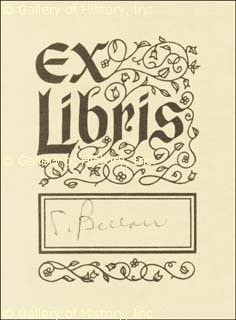
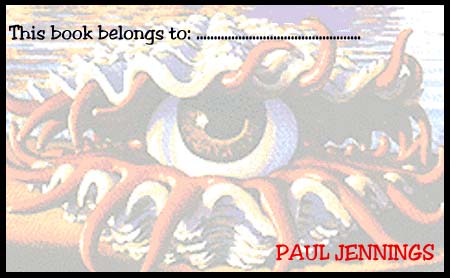
What is a book plate?

A book plate (the personal library version) was highlighted on Rosina Lippi's blog, but here are some pictures of other plates:


As for Avery stickers, they are fine as long as they are something that bookseller wants to use. If I could get ahold of avery stickers with a lifetime supply of Gregory Maguire or Christopher Moore's autographs, I'd be alllllllll about those avery stickers.

Tuesday, February 14, 2006

Tears for Fears in Self-Publishing

I meant to post earlier on the topic of self-published books, but then I would get distracted by other subjects. Fortunately Ron Franscell wrote this thoughtful comment on my Doing My Homework #4 thread:

I occupy this rather odd niche: I am both a daily newspaper editor and a trade-published author. I am sympathetic to the promotional predicament of authors, but also a gatekeeper for what's news (and what isn't.) Those two sensibilities collide when a local writer sends his press release about a new book.The main elements of a good newspaper story will be local relevance, timeliness and impact.In a market area of some 350,000 people, we get 1-2 notices of an authentic trade-published book by a local writer every few months ... but we get roughly 1 per week from self-published writers at AuthorHouse, iUniverse, Xlibris and others. These releases are always seeking reviews and/or publicity about signings.Do we treat them differently? Yes. We simply deem self-published books -- by virtue of having circumvented the strict filters of trade publishing (which can be too strict and too commercial, admittedly) -- as lower quality products. Not always, but generally true. By the same token, we deem trade-published books as having survived the rigors of having found an agent, an editor who'll risk a publisher's money, and legitimate distribution -- as well as the expectation our readers will be able to find it in major bookstores.What do they get? We don't trash the self-published books, but rarely do they get more than one paragraph, and it's usually in a "story" about other self-published books. And we name the animal: We say in print it's self-published. And we never review it. (If you're self-published, not local, and the book is not of local interest ... don't waste my time and your postage.)The trade-published local author/book generally gets much more: A story, possible review, a fair punch on a local signing. Why? We presume the rigorous filters of the trade tested its mettle.Not every paper has a trade-published writer in charge (and some probably have self-published authors in charge), so policies vary. As a book-reviewer who's written for some of the biggest book-review outlets in the USA, I also know that the likelihood of a self-published book getting a major review is next to nothing unless it becomes a news phenomenon on its own.

On a bookstore level, especially a chain level, we feel the same way. To date, I can think of only one self-published book that has made it into my store and sold successfully. It was a restaurant and shopping guide book written by a local woman (with a graphic design background, yes this is important) with friends in high places. And when I say self-published, in her case I mean actually did everything herself and managed to produce an attractive book due to her design background (still needed a better editor, but she fixed that in later additions). With the help of her friends, she managed to get on a local morning show, along with a radio show or two, and pump up the demand for her book. By the time the eighth person asked us if we had it, and after the fifth phone call to our sister store, we knew we had to break down and order the book.

By creating a demand, she not only got picked up by all the large chains in the area, but by a distributing house, and all the independent bookstores.

She is not the norm.

Nor is the woman who just received the million dollar deal for her self-published Mary Magdalene trilogy. Kathleen McGowan’s the lottery winner of the self-published set. She and G.P. Taylor represent those people who maybe would have been published by a big house eventually if they had kept submitting (and editors weren’t over-worked and under-paid). What helps in both of their cases is that they managed to create their own publicity, do their own marketing, so in the end they are actually giving a publishing company a book with most of the work already done. It’s an almost perfect package just missing the bow.

When I receive self-published books at the store, or the marketing information for a self-published book, it always makes me a little sad. Part of me just wants to hug the author and tell them that I understand, I really, really do, but I know that this hug will be followed with the comment, “but I can’t carry your book.”

What a slap in the face.

The truth is, when it comes to chains, it is really hard to get anything in that has not already been filtered through one of the big distributions giants like Ingram and Consortium. For the most part (and perhaps completely, I’m not sure so I’m qualifying), my company ships through Ingram so if you are not on the Ingram or the Baker and Taylor list, I cannot order you in. Further more, while my giant sister stores have expense accounts specifically created for purchasing books at that level (in case they run out of an authors book during a signing and need to buy some from the author, or in the case of the self published local woman, needed to buy her book from her), but I have nothing but the cash in my drawers.

I realize that my company is not going to send me every book that is in demand in my area—when your corporate office is 2000 miles away they have a hard time keeping up on the local interests—but that’s why I can order from other distribution centers. Still if your book is not in demand, but also not available to me to order, there is nothing I can do for you.

I know that this is different for independents on both the large and small scale. The Santa Cruz Bookshop and Powell’s have different buying ideals, and their buyer is also on site. They might be willing to pick up a copy or two of your book, so you have some place to send those who are interested, whereas I do not have the space or the permission.

Like Ron, I’m not against self-published books, but I do treat them differently. I’m not going to sit an author down and tell them why their book can’t be on my shelf, or go over the quality of their paper, print and editing. This is their baby and they wouldn’t hear me anyway. I’m just going to politely decline or tell them I can’t due to corporate’s structure.

I realize that this might mean I’m missing the McGowans and Taylors of the world, but I already cannot keep up on my reading. One or two missing from the stack doesn’t bother me that much. I long ago acknowledged that I cannot read every book in my store, let alone all the books in the world.

What I’m saying is, if you or someone you know really believes in their book and their writing, don’t turn to self-publishing. Keep submitting. Look to some of the smaller, quality houses. Really target what your book is about.

And don’t make me cry by sending me a Press Release or a copy of your book from iUnivers, Xliberis, or AuthorHouse. You have better things to do with your money than give it to a vanity press.

Booksellers? Readers? Writers? What are your thoughts on the current state of the self-publish universe?

Thursday, February 02, 2006

Doing My Homework #3: Fear and Loathing in the Bookstore

On the Questions thread, Paul asked:

What popular books do you loathe so much that your soul winces when you are
asked about them?


Tuesdays with Morrie.

I know that people love it. I know that they looooooove to give it to other people as a gift. I know that it must have something valuable in it because people keep coming back for it, but for the love of all that is chocolate, make the insanity stop!

It jumped back on my bestsellers list this week.

Yes, that’s right. It’s been out since October 2002, but now it’s back on the bestsellers list to taunt me with its presence.

Doesn’t everyone who wants this book own it already?

That said I realize my opinion is not the popular one, nor is it the most monetarily pleasant as far as the bookstore goes, so I keep my mouth shut. We all do. There is a general loathing for all things Morrie at my store, and after we sell another copy it all comes out.

“Who the hell is s/he going to give it to? Do they live in a cave?”

“Maybe they just learned to read.”

“Just watch the Lifetime Movie, bucko. It won’t take as long.”

And so on and so on. We wait for the customer to leave the store, of course, and we make sure no one is around to hear us. We realize that everyone has their own reading tastes, and most of our contempt stems from Morrie always being there. In large quantities. Quantities that become even larger over Christmas and Easter.

Someone at the company looooooves Morrie and obviously doesn’t have our problems.

As for other books, none reach the levels that Morrie has inspired with the exception of Melville’s Billy Budd, a book whose mere mention causes me to apologize to any customer who has to buy it.

Customer: I’m looking for Billy Budd.

Me: I’m sorry.

It’s either that or scream, “Dear God, Why?” which I’ve found weirds people out.

Weirding people out does not translate into book sales.

For the most part, I don’t form an opinion either way about bestselling books unless I’ve read them and I rarely ever loathe books I’ve read (exception: see Billy Budd). Occasionally Harry Potter does make me want to stab myself in the eye, but that has more to do with people asking me the same question over and over.

In reference to HP6 on the release day, “Why isn’t this out in paperback?”

In reference to HP6 a week after the release date, “Shouldn’t this be out in paperback by now?”

In reference to HP6 a month after the release date, “No, my husband/wife/daughter/son/cousin-twice-removed said it was out in paperback. I want the paperback. Where is it?”

And so forth.

For the record Harry Potter does not adhere to the eight to twelve month rule when it comes from the transition from hardcover to paperback. The cynic in me says Scholastic will milk you for all you are worth, and that’s why they wait so long to release HP into paperback, in reality they seem to have timed the last two releases to coincide with the Christmas season. I have no idea when HP6 is being released to paperback, if I had to guess I would say possibly this November. I also have no idea when HP7 is coming out, what the title is, or what happens.

We will all probably find out at the same time on the evening news.

How about y'all? Any books that make you want to drive an ice pick through your temple? Please share and know that you are not alone.

Saturday, January 21, 2006

I'm baaaaaaack... (cue the scary music)

The week of no internet is over, and I have returned alive, if not victorious. I'll get to answering everyone's questions and comments when I get home from work tonight (maybe), but I thought Doug should have an immediate answer:

A cover flat is just that: a flat version of the cover, unattached to a book, which has the front, spine and back. On the white underside you can typically find information on the marketing campaign. They can be useful or totally useless depending on whether you have the imagination or the space for them.

I'd find you a picture, Doug, but my scanner does not work and I'm a wee bit too tired to search the internet. If anyone has a picture readily available would you offer up a link? Think of it as free advertising.

Oh, and if anyone can tell me why the hell my bravenet counter spiked yesterday I would be very appreciative. I have this sudden fear that I've somehow got attached to a porn site.

Wednesday, January 11, 2006

I'm Feelin’ a Wee Bit Freyed Around the Edges

I’m sorry, I couldn’t help it. Everyone else was doing it and I couldn’t bring myself to rise above the pun. Give a girl a break, why don’cha? I just got this from Drea,

"So, I'm going to use the "Covering Covers" topic as an excuse to ask you about your take on Frey's AMLP snafu. I like the cover (even if it does make me wish I was in second grade and eating cupcakes with sprinkles).

What do you think about Random House's decision to offer refunds and encourage dissatified customers to try and return the book to the store where they bought it? I thought my poor bookstore manager would cry. We live in a very-suburban-Oprah-watching area;)."

(See: this CNN article)

My first thought was, “Son of a fucking bitch. Oh no they didn’t.”

My second one was, “No way in hell they’re getting a refund without a receipt. They want store credit, that’s fine, but refund? Not without a temper tantrum.”

Pretty miserly, I know, but a lot of creeps crawl out of the woodwork when they think they can get free cash. I wouldn’t put it past some jerk to rip off a couple of books from one store and then try to return them at another. I’m not all that concerned at the moment with my regular customers. I had three people buy the book after hearing about the controversy. In fact, they bought it because of the controversy.

“I have to know what he lied about,” one told me.

Another said, “Well my friend loves it, and even if it is fiction it sounds like a good story.”

So do I think sales will go down significantly? Perhaps a little, it really depends on how Oprah responds to this, for the cult of Oprah is strong. But if there is one thing I know, it’s that Americans love, love, LOVE watching the proverbial train wreck, why else would so many follow the gossip mags so closely? This has the potential to actually increase sales, at least for My Friend Leonard. The Boss’s response to this whole brouhaha? “Oh, maybe they’ll rush Leonard to trade, the sales will be great!”

Why yes, we are opportunistic. Perhaps it’s because I’m not as shocked by authors behaving badly as I used to be, which is a sad, but with authors committing plagiarism and not getting any more than a slap on the wrist, the idea that a guy—a known liar, druggy and thief—made up parts of his memoirs?

Maybe he can claim it was all part of a drugged fueled lapse.

I wish that I could give something more, funny or brilliant or--I don't know--something, but guys, I'm so tired. I hate closings followed by openings.

So how about y’all? Will any of you be returning your book?

Monday, January 09, 2006

SB Day: Hit with the Pretty Stick (the “Come on Closer” remix)*

*Warning: This is a continuation of my on going series “Book Sense 101: Covering the Basics of Covers”. You are not required to read the first part (this isn’t school), just like anyone who read the previous post is not required to read this one. I’m just putting it out there so you know.

It's another Smart Bitches Day, and I thought I should continue with the cover theme started yesterday. Now I ideally a cover should evoke some sort of interesting or emotion, just like a piece of art. This feeling should somehow be represented by the book. Given this line of reasoning, SciFi/Fantasy covers should evoke some sense of technology, magic or other-worldness, and Romance covers should…well, rev our ovaries if they’re supposed to be hot. As the song says:

Hot temptations
Sweet sensations
Infiltrating through
Sweet sensations
Hot temptations
Coming over you


You should feel all of these things when you look at the cover. It’s a romance! You’re going to spend the next several hours of your life (if you buy this book) following the natural progression of these people’s lives and how they join them together. Emotions—love, lust, joy—run the spectrum of sexy to heartwarming, and you get to act the voyeur on it all. How cool is that?

Correction: How cool would it be if the cover actually told you this?

Currently the romance covers are the bane of most romance readers’ existence. They feature awful clinches, half clothed women, man-titty galore, and in the case of the Ellora’s Cave covers things I wouldn’t even put in a circus freak show or Ripley’s Believe it or Not (see: “Maybe he’s compensating for something”).

Do we want to see some woman’s half-naked back? Well, the female form is pretty, but it doesn’t really do anything for me. I can take it or leave it, I guess.

Do we want to see a man with a cup-size bigger than our own? Hell no!

Do we want to spend half our time looking at the male half of the cover going what the fuck is that? Not unless we’re there specifically to mock.

Romance readers have developed a hard shell against the covers of the books because what the publishers have put us through is ludicrous. You’ve seen on clinch cover you’ve seen them all; the pictures of the estates on the front tell us nothing, absolutely nothing; and you’re not going to flash an Ellora’s on the bus. You just aren’t, especially when it’s damn easy to make a brown paper cover.

I’m sure the cardboard cut out clinch covers evolved for a reason, maybe to differentiate the romances from the straight fiction when they were all shelved together once upon a time. That was a long time ago. Now wherever you go romance has its own section just like SciFi/Fantasy and Mystery. Sure it keeps people accidentally picking up a book from one of these genres when they are just browsing because some will never venture into these sections, but let’s be frank (or you be Frank and I’ll be Earnest), with the cover situation being what it is, they wouldn’t have picked up these books anyway.

And yet still they torture us, TORTURE US with these covers, leaving a whole hell of a lot of romance readers (at least) crying out, “Why can’t they get a clue?”

Well folks, it appears that they just might have. Not only are there books coming out with covers that show a great improvement on the old, but they’re actually appealing! Candice Hern, romance author and Fog City Diva, recently did a post on the changing face of historical romance covers in “Candice Ponders Historical Covers.” Her own cover for her upcoming book, In the Thrill of the Night, is a great improvement over her traditional clinch covers of the past.


The hint of lace, the luminescent pearls: very sensual touches that fit with the theme of Merry Widows getting their Merry on, and the use of a historical portrait gives us an instant recognition of the time period (as in it’s a historical novel not a contemporary). I’m not a big fan of the ghostly couple superimposed on lower left-hand side, but I a.) believe in less is more, and b.) think the edges could have been smoothed out the bit better. (Both of these points tell me that I’ve spent far too much time thinking about this.) This cover is going to pop when faced out in the romance section, just as it is will on the New Arrivals wall. The combination of the pale white skin and the purple backdrop guarantee that.

Congrats Candice, as long as this book’s innards live up to its cover you’ve got a winner on your hands.

But what about contemporaries? While a lot of the books seem to avoid the clinch cover, they’re kind of blah as if the artist didn’t know what to do. A lot of them have the cartoonish drawings going on these days, but really that only works for something that’s romantic comedy. Put one of those drawings on a book that’s mostly romantic suspense and you’re going to have a lot of customer returns. Up until this point, romantic suspense seemed to either require a picture of a woman running, or a moody, dark alley—something with a single light source. These covers have progressed lately with the shadowy imprint of a couple getting it on (see the latest covers for Linda Howard and Jayne Ann Krentz), but I don’t have to see that much to get a sense that this couple is hot for each other. I really like how they designed Alison Kent’s cover for her upcoming release Deep Breath.


Sure it has that “they’re totally getting it on” aspect to it, the naked shoulders tipped me off (‘cause I’m observant like that), but it fits with the whole theme she’s got going on for her series. The black and white aspect of the picture is very voyeur. Are they caught on camera by security? This is a spy novel. And since it is a spy novel the shades of gray inherent in a black and white photo represent the world that a spy inhabits.

The prominence of the author’s name tells us that her publishing company thinks this is a name that sells because it’s bigger than the title, and the blurb line (in this case a lead in for the title) is small, giving the impression that it’s an afterthought. What this cover says to me is that this is a moody, sexy novel that is tempered with some lightness (I get this from the fact that they chose to do Kent’s name in hot pink).

Is this a reflection of the inner aspects of the book? I don’t know. From the back cover copy I read at her site, I would think so, but only the author or an actual reader could say for sure.

So what do you think, romance readers: do these covers work for you?

Are we finally witness a cover revolution in the industry or are these just to throw us off our games?

Or am I once again reading too much into a cover?

If you wish to continue this series into the realm of nonfiction, the next section is Book Sense 101: Covering Covers, the Just the Facts, Ma'am Edition.